InsightMath
TIMELINE:
2020-2025
CLIENT:
MIND Education
PRODUCT:
K-6 Mathematics Core Curriculum
ROLE
Senior Visual Designer
Business Strategy
The Challenge: From Supplemental to Core
MIND Research Institute was a leader in supplemental math software with ST Math, but lacked a presence in the primary market: Core Curriculum. To achieve that, MIND needed to launch a comprehensive Core Curriculum program that's deep in the roots of neuroscience.
The Product Vision:
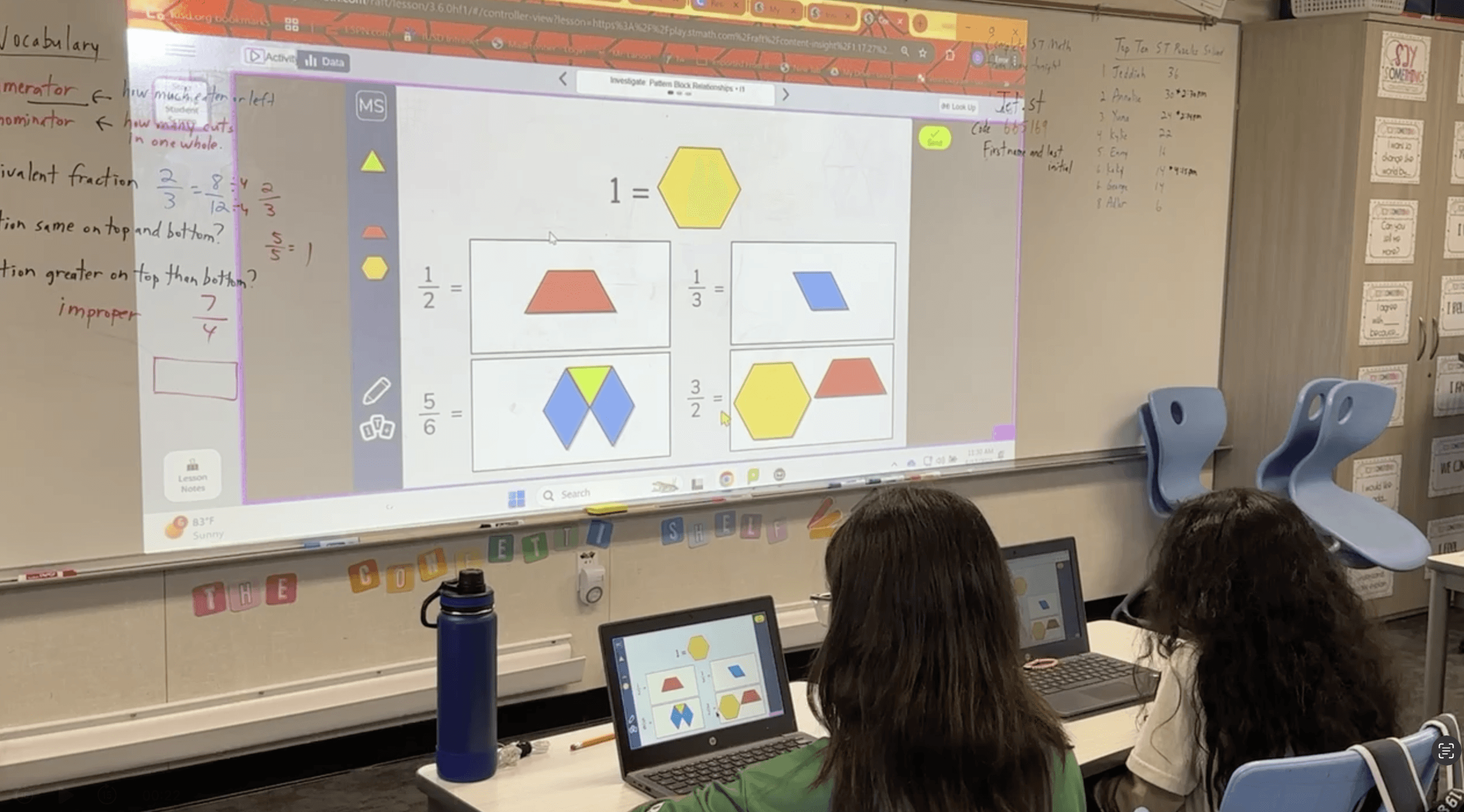
Unlike traditional text-heavy textbooks, InsightMath utilizes a neuroscience-based, visual-first approach. The goal was to replace rote memorization with deep conceptual understanding through multimodal learning and collaborative problem-solving.
MAJOR CONTRIBUTION:
Conceptualized workbook "Playbook" as an exploratory math playground enabling multiple learning pathways, empowering students to engage with mathematical concepts through play-based discovery.
Led visual strategy informed by usability testing and stakeholder feedback, establishing a clear visual hierarchy that reduced cognitive load and improved student focus and engagement.
Contributed to the inclusive character system and DEI strategy, creating research-informed characters that reflect diverse student identities and support motivation, belonging, and engagement in math.
Designed and implemented a centralized asset system and Trello-based Kanban workflow, improving design production velocity and reducing version-control issues across three cross-functional teams.
Integrated AI-assisted vector production into the digital pipeline and paired it with human refinement, enabling a three-designer team to deliver 1,300+ consistent digital assets on time without compromising UX or visual standards.
01. Initial Concept and Design for Cognitive Load
Role: Visual Designer.
Responsibility: Product Strategy, Prototyping, UXR
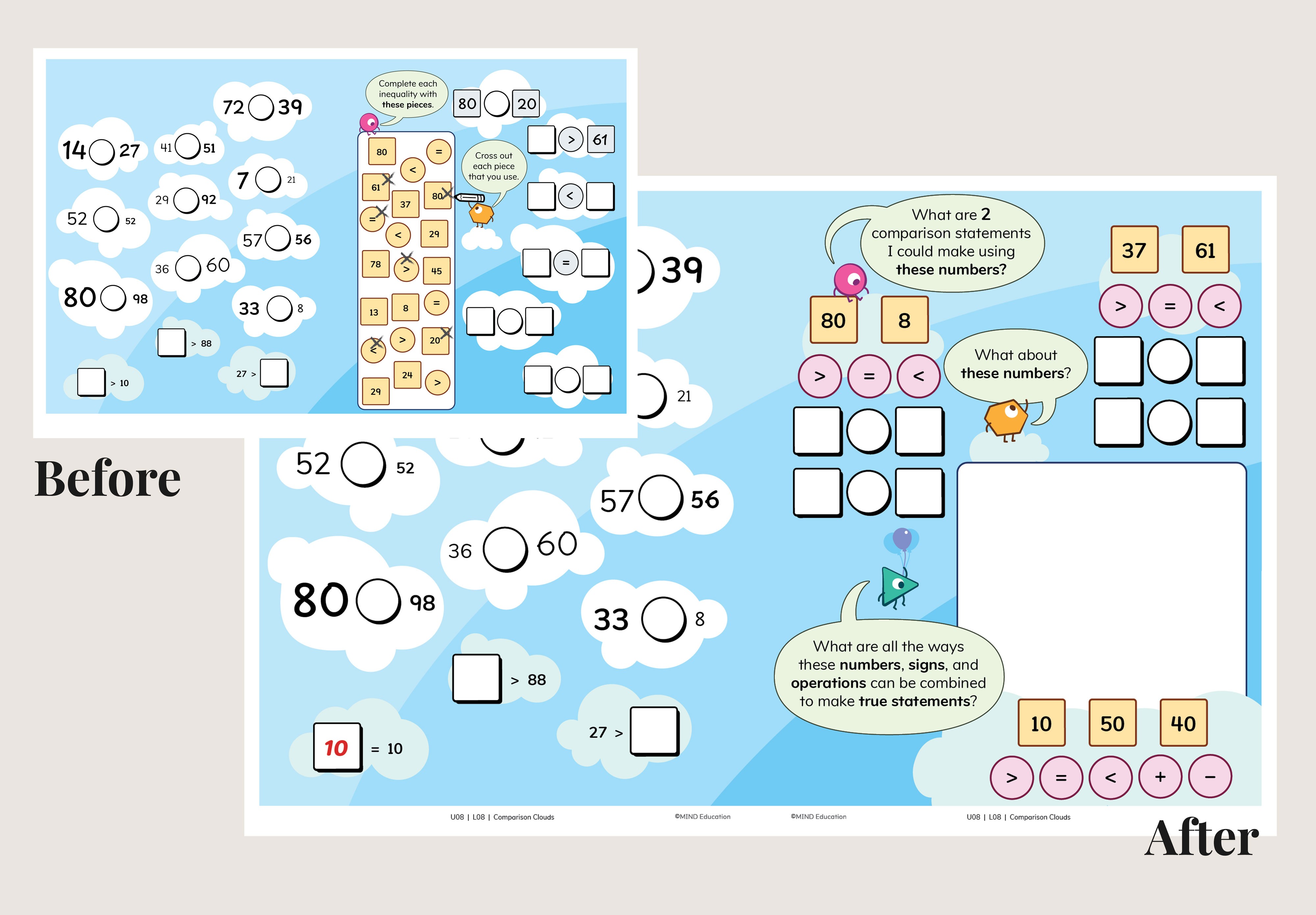
The Problem: In the "Pioneering" phase, our initial hypothesis was to make math fun using a busy, high-energy 'comic book' aesthetic that carried from previous success.
The Insight: Early user testing revealed a critical failure: As a more static format, the visual noise created cognitive overload. Students were distracted by the amount of information and art rather than engaging with the math. The "fun and cool" visuals were actually hurting accessibility and comprehension.
The Solution: Shifting from "decorative" to "functional":
Visual Hierarchy: Optimized the visual layout to ensure math representations took center stage, while others contribute to overall eye float.
Color Strategy: Developed a refreshing and vibrant yet functional color style that is pleasing without overwhelming it.
The Outcome: Testing confirmed that the new direction reduced cognitive load and received positive feedback and student excitement during testing.
By leveraging insights from previous successful projects and reviewing feedback from stakeholders, I explored a vibrant, uplifting color direction and optimized visual hierarchy to ensure math content prominence and reduce cognitive load.
This strategy, as evidenced by positive student engagement and experience during testing, along with favorable feedback from parents and teachers, set the foundation for future iterations.
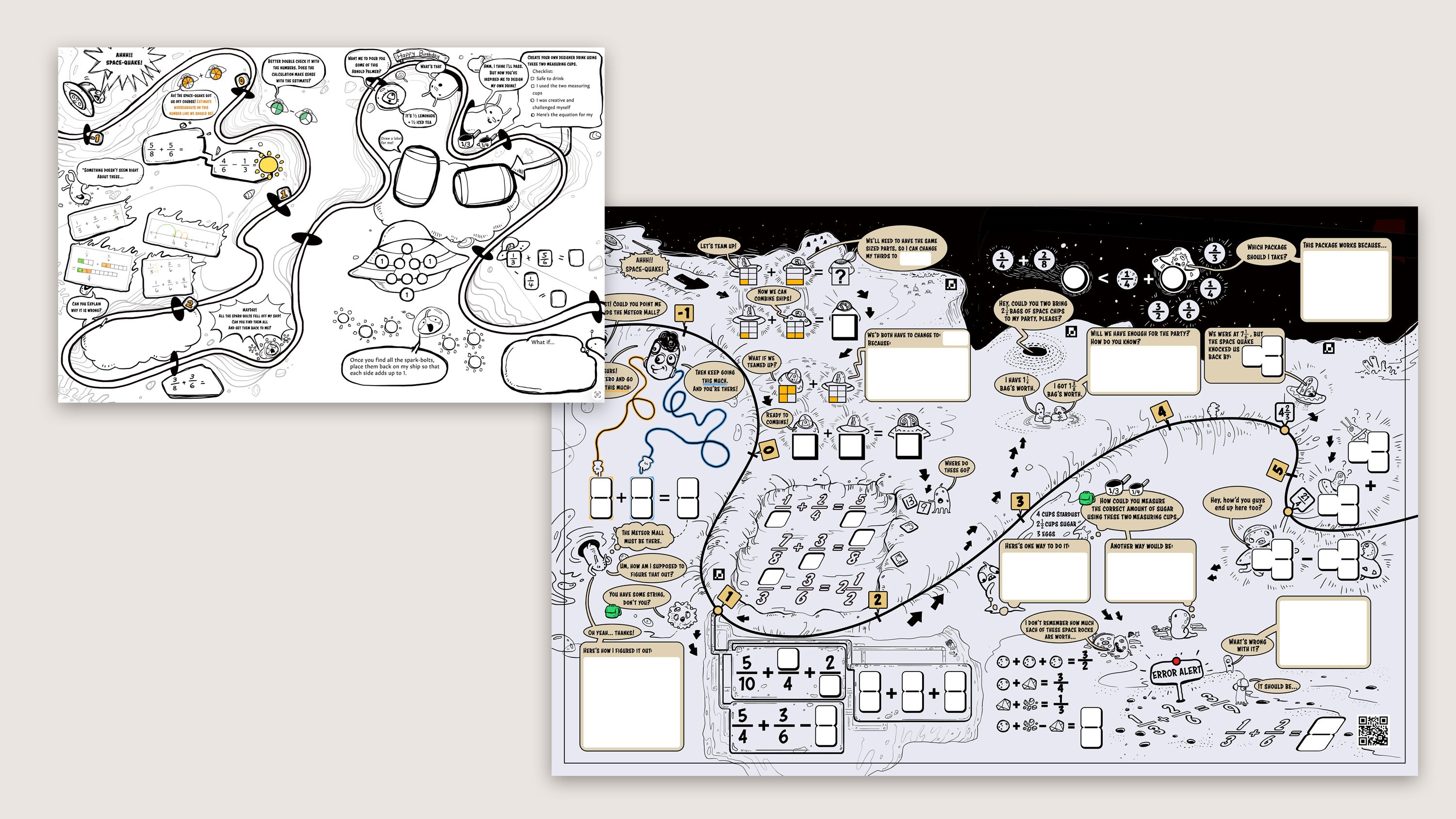
Early Prototype
Math isn’t just numbers and equations; it’s everywhere in our daily lives.
Beyond a traditional workbook, Playbook utilizes narrative-driven scenarios that mirror how students encounter math in real-life situations. Through culturally responsive contexts, real-world applications, and varied problem-solving approaches, Students learn to recognize mathematical concepts across different situations and develop flexible thinking strategies.
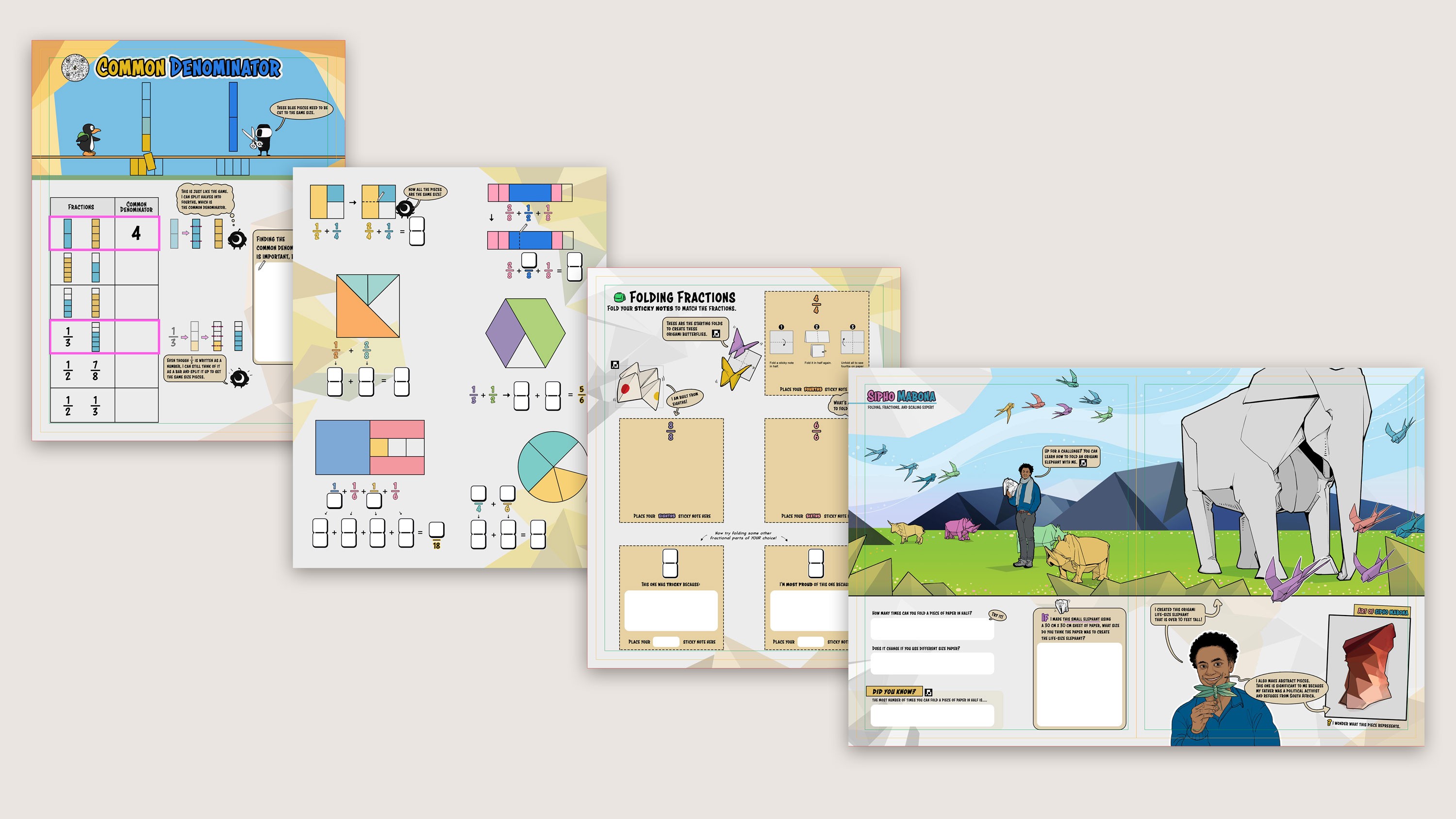
My Design Iteration Prototype
Based on stakeholder feedback, we refined the product to be math-focused, while also integrating varied learning puzzles and culturally immersive content to inspire students and highlight their potential.
Inclusive Design & User Representation
Strategic Approach: Asset-Based Design We adopted an asset-based design approach to ensure students see their identities reflected in the curriculum. By creating 20+ authentic characters with unique backstories and relationships with math, we lowered the emotional barrier. We transitioned from static illustrations to a narrative-driven and storytelling experience, where characters face challenges and grow alongside the students.
Research-Driven Personas: The "Arman" Case Study
To create impressive characters who really connect with users (students), I choose to create characters based on real-life observation.
The User Need: Representation for students with disabilities who are often invisible in learning programs.
The Solution: I designed "Arman," a character with a hearing implant. His storyline focuses on his "gifted talents" rather than just his disability.
The Outcome: Arman became the favorite persona for the program, frequently used in external presentations to demonstrate our commitment to Inclusive Design.
02. Scaling the System: Design Operations
Role: Senior Visual Designer
Responsibility: Visual Systems, Team Leadership
As the project transitioned from prototype to production, my role evolved into a Senior designer for a nine-person team. My strategic focus shifted from visual exploration to operational scalability.
The Challenge: Through internal stakeholder interviews and workflow audits, I identified that we were facing some challenges:
Fragmentation: Teams were using different versions of assets because files were scattered across multiple locations and teams. Some were using updated versions while others worked from outdated files, creating confusion and visual inconsistencies.
Inefficiency: Through a survey, I found that designers were mostly spending 30% of their time searching for requirements or organizing files rather than designing.
Strategic Solution 1: The "Single Source of Truth" Ecosystem.
To eliminate these bottlenecks, I architected a centralized asset system to bridge the gap between Design and Development.
Adobe Libraries: A component and template library for designers to ensure 100% visual consistency.
SharePoint Portal: A self-service asset library for content writers and developers, reducing handoff friction.
OneDrive: A structured workspace enabling parallel workflows (designers working on the same file simultaneously).
Strategic Solution 2: Agile Workflow (Kanban) I implemented a Trello-based Kanban system to replace random communication. By centralizing requirements into each task card and actionable lists, we removed the "Search & Review" phase. Designers could bypass administrative friction and proceed directly to production.
Key Outcomes:
Increased Velocity: Production speed increased by 20% because designers spent less time searching for information and could start work immediately.
Zero Redundancy: The transparent workflow eliminated double-handling of tasks and ensured clear ownership across cross-functional teams.
Visual Evolution 2.0 As the team expanded, we needed to move from individual artistic styles to a Scalable Visual System. We decided to standardize our vector styles and color palettes to ensure that different designers and artists could produce thousands of pages and digital visuals that felt like they came from the same brand.

03. Production and Design Iterations
AI-Augmented Workflow
The Challenge: The digital curriculum required the rapid creation of 1,300+ visual assets with a lean team of only three designers. Traditional vector illustration methods would have caused significant delays in delivery.
The Strategic Solution: I integrated Adobe Illustrator’s Generative AI features into our production pipeline to automate the creation of complex vector foundations.
Parallel Processing: I set up a workflow where AI handled the “base build” for complex graphics. I wrote prompts that matched our visual style, let AI generate the first-pass shapes, and used that generation time to review the next vector request and its requirements. Once the asset was ready, I refined it to meet our design system and prepared the final file for use. This reduced production downtime and kept the pipeline moving.
The Outcome: This approach allowed us to successfully deliver 1,300+ high-quality assets on schedule, effectively doubling the output capacity of the design team without burning out resources.
04. Validation & User Research
As InsightMath approached its launch, I collaborated with the UX Research (UXR) team, Product Directors, and cross-functional designers to validate the end-to-end user experience across both digital and physical classroom environments.
Classroom Usability Testing
I participated in multiple rounds of summative usability testing within school districts across Orange County and Laguna Beach. My key contributions included:
Ethnographic Observations: Facilitated on-site observations of the "Playbook" (student workbook) in live classroom settings to evaluate real-world usage.
Stakeholder Interviews: Conducted targeted interviews with students and teachers to pinpoint friction points, engagement drivers, and areas of cognitive overload.
Thematic Analysis: Translated raw field notes into actionable themes focused on navigation, instructional clarity, and visual hierarchy.
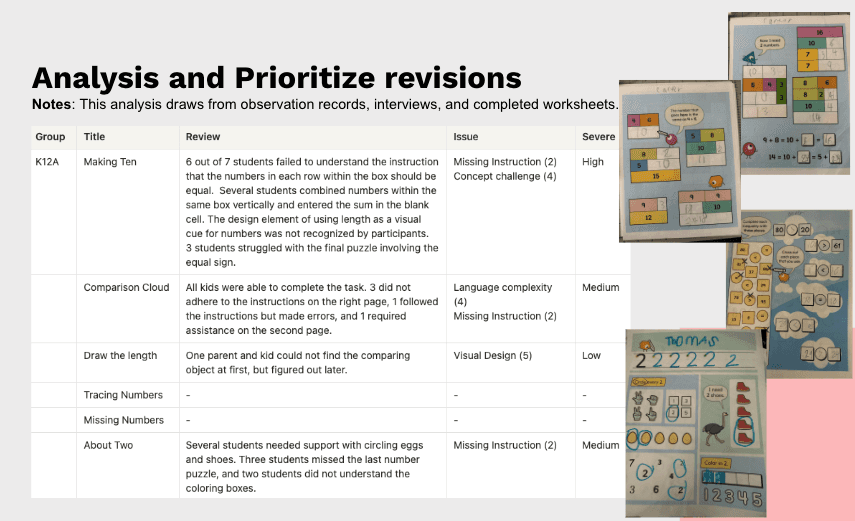
Data-Driven Iteration
Working alongside UXR and Product partners, we transformed these research insights into tangible design refinements:
Optimizing Instructional Clarity: Refined page layouts to mitigate instructional ambiguity and streamline student workflows.
Pain Point Disambiguation: Isolated whether user challenges stemmed from language barriers, visual hierarchy, or conceptual complexity to inform precise, evidence-based design updates.